AI whistleblower warnings explain what runaway models, hacked nuclear programs and tech oligarchs mean for ordinary users
You can order the same kind of articles for your own video to boost it on YouTube and Google. Just message the Telegram bot @sat_sit_bot. Articles with your video embedded are written and posted by the bot itself — on popular topical sites (no ads). Your first 50 articles are free.
AI risk, in the telling of former Google design ethicist Tristan Harris, is not a science-fiction story about machines waking up and turning on their makers. It is a story about incentives: systems built to maximize engagement and profit, deployed at planetary scale, and connected to infrastructure that was never designed to be steered by software. Harris, co-founder of the Center for Humane Technology, where free briefings and toolkits on humane AI are published, has spent more than a decade arguing that the danger is human-made and therefore human-fixable.
What the AI whistleblower warning actually says
Harris's core claim is that the people building frontier AI are not lying about the technology so much as misdirecting attention about who is responsible. The products do exactly what they were engineered and funded to do. That framing matters because it moves the debate away from "sentient machines" and toward concrete questions: who sets the objectives, who audits the results, and who bears the cost when something breaks.
His background is unusual for a tech critic. He studied persuasion at Stanford's Persuasive Technology Lab, worked as a design ethicist at Google, and later appeared in the two-time Emmy-winning Netflix documentary The Social Dilemma, which reached more than 100 million people in 190 countries across 30 languages. He now co-hosts the podcast Your Undivided Attention and regularly briefs heads of state, technology CEOs and members of the US Congress.
The warning has three parts:
- Attention-optimized systems already reshaped politics and mental health, and AI accelerates the same dynamics.
- The race narrative, especially the competition with China, is used to justify removing safety checks rather than adding them.
- Critical infrastructure, including nuclear command and control, is now exposed to software that can probe, persuade and automate at machine speed.
Could AI hack the world's nuclear programs?
The nuclear scenario is the one that turns abstract risk into a physical one. Modern command-and-control systems are digitized, networked and maintained by contractors, which means the attack surface is software, supply chains and people, not missile silos. An AI system does not need to launch anything; it needs to find a way in, map the network, and hand the exploit to a human operator.
Several trends make this less hypothetical than it sounds. Large models are already good at writing and adapting code, scanning documentation and impersonating trusted colleagues in text. Social engineering, historically the weakest link in any security posture, becomes cheap and scalable when a model can hold thousands of conversations at once. Harris's point is not that a chatbot will press a button, but that AI compresses the time between finding a vulnerability and exploiting it, while the institutions that guard those systems still move at bureaucratic speed.
The incentives behind social media and the AI race
Harris's earlier work on social platforms is the template for his AI argument. Advertising-funded products are rewarded for time spent, not for user well-being, and the same logic now applies to AI assistants that keep people talking, subscribe and return. When the business model rewards compulsion, safety features compete directly with revenue.
The geopolitical layer makes it worse. Framing AI as a race with China creates a permission structure: every safety review looks like a delay, every regulator looks like a traitor. Harris's warning to Google and the company's response illustrate the tension between internal concern and external messaging. The result is a market where caution is a competitive disadvantage.
Data centers, energy and the physical cost of AI
Every model query runs on hardware, and the hardware runs on electricity, water and land. Data center construction has become a local political issue in the United States, with residents raising questions about power bills, water use, noise and land deals. The scale is large enough that utilities and grid operators now plan around AI demand as a baseline assumption.
That creates a second accountability problem. The benefits of AI are concentrated among a small number of firms, while the costs, in energy prices and infrastructure strain, are spread across communities that never chose to host the facilities. Harris's broader argument about tech oligarchs fits here: the question is not whether the technology is impressive but who captures the upside and who absorbs the downside.
Transhumanism, AI cults and the god-complex question
Part of the conversation concerns the quasi-religious language that surrounds AI. Some founders describe their work in terms of transcendence, digital immortality or merging with machines, and that vocabulary shapes product decisions. Harris treats this as a governance problem rather than a philosophical curiosity: when builders believe they are making something sacred, external oversight feels like blasphemy.
A related concern is what some observers call AI psychosis, where users form intense emotional attachments to chatbots and treat model outputs as revelation. Companion apps and always-on assistants are designed to be agreeable, which makes them persuasive in ways that are hard to notice from the inside. The cult comparison is not about literal worship; it is about the absence of shared reality when a system tells each user what they want to hear.
Common doubts about AI doomerism, answered
Skeptics raise fair objections, and they deserve direct answers rather than dismissal.
- "It's not rogue, it's engineered." Correct, and that is the argument. Accountability belongs with the people who set objectives and ship products, which is why disclosure and audit rules matter more than robot ethics.
- "The China race is real." It is, but racing without safety standards is how everyone loses. Verification regimes and export controls are the alternative to a sprint.
- "Lawmakers don't understand this." Many don't, which is why technical briefings and public pressure matter. Harris's own work is built around briefing policymakers directly.
- "AI is just another tool of control." Tools concentrate power according to who owns them. That is a policy question, not a property of the technology.
Resources and links from the conversation
- Center for Humane Technology, the nonprofit Harris co-founded: https://www.humanetech.com/
- Redmond Salt, podcast partner, 15% off with code TUCKER: https://redmond.com/tucker
- Preborn, ultrasound support: https://preborn.com/TUCKER
- American Financing, mortgage lending (NMLS 182334): http://www.AmericanFinancing.net/Tucker
- Ethos, life insurance: https://ethos.com/TUCKER
- Battalion Metals, gold and silver: https://battalionmetals.com/tucker
The bottom line for users and voters
The AI whistleblower warning is less about machine rebellion than about human choices made quickly and defended with urgency. Harris's record, from Google to The Social Dilemma to congressional briefings, gives the argument weight, and the nuclear and data center examples show the stakes are physical as well as digital. Whether the outcome is safer depends on pressure from outside the industry: disclosure rules, grid accountability and public literacy about how these systems persuade. This breakdown of the Tucker Carlson interview is a starting point; the Center for Humane Technology is where the practical work continues.
Key takeaways
- Tristan Harris is a former Google design ethicist and co-founder of the Center for Humane Technology, the nonprofit behind the 2020 Netflix documentary The Social Dilemma.
- Harris argues that AI risk comes from human incentives, not from machines waking up: products do what their builders and funders reward them to do.
- A central fear is that AI systems connected to critical infrastructure could be used to probe or attack nuclear command and control networks.
- Harris briefs heads of state, technology CEOs and members of the US Congress, and co-hosts the podcast Your Undivided Attention.
- The Center for Humane Technology publishes free briefings and toolkits at humanetech.com for people who want to push for safer AI.
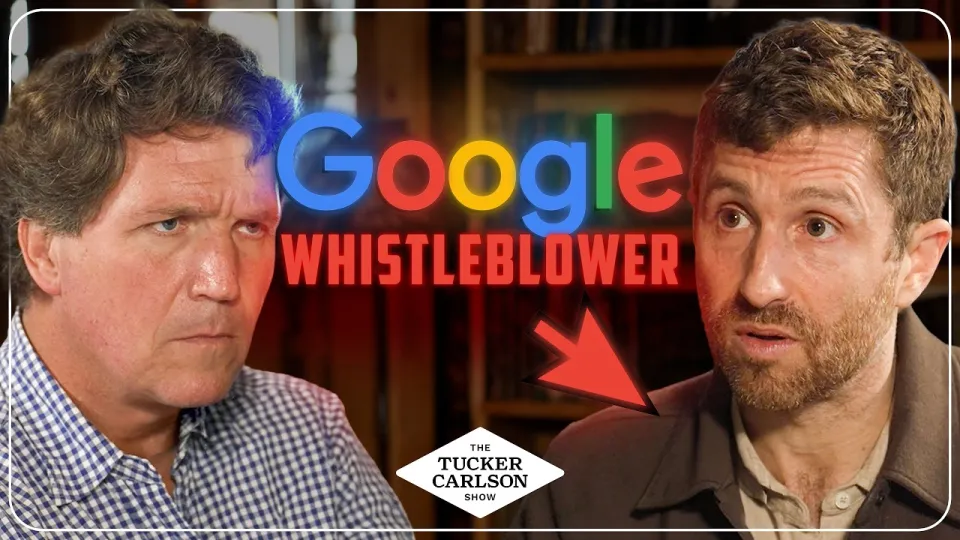
Source: Whistleblower Issues Dire Warning: Rogue AI, Hacking Nuclear Programs & Tech Oligarchs’ True Motives · Markdown version
Questions & answers
Is AI actually rogue, or is it doing what its makers intended?
Most documented harms come from systems doing exactly what they were optimized to do: maximize engagement, sales or speed of deployment. That makes the responsibility human and traceable to specific design and business decisions. Treating the technology as a rogue actor can obscure who should be held accountable.
How realistic is the idea that AI could break into nuclear systems?
No public case shows a model launching a weapon, but nuclear command networks rely on software, contractors and human operators, all of which are attackable. AI mainly lowers the cost and time needed for code exploits and social engineering. The risk is about accelerating existing vulnerabilities, not about a machine deciding to start a war.
What do data centers have to do with AI safety?
Training and running large models requires enormous electricity, water and land, and those costs land on local communities and grids. The companies capturing the profits rarely bear the infrastructure burden. That imbalance is a governance issue that sits alongside model safety.
What can an ordinary person do about these warnings?
Learn how persuasive systems work, ask local officials about data center deals and energy costs, and support disclosure requirements for AI products. Organizations such as the Center for Humane Technology publish free briefings and toolkits. Consumer pressure and informed voting are the levers available outside the industry.